Training Programme on Data Collection for Rural Development!
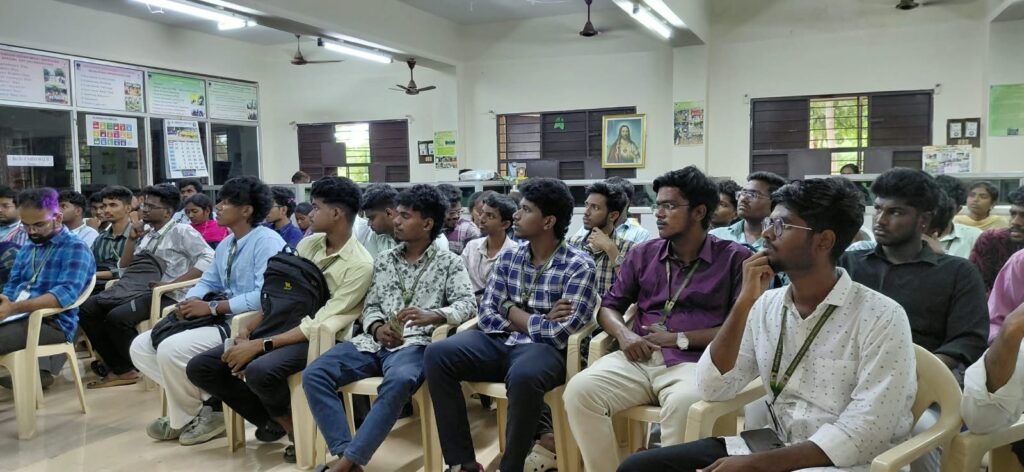
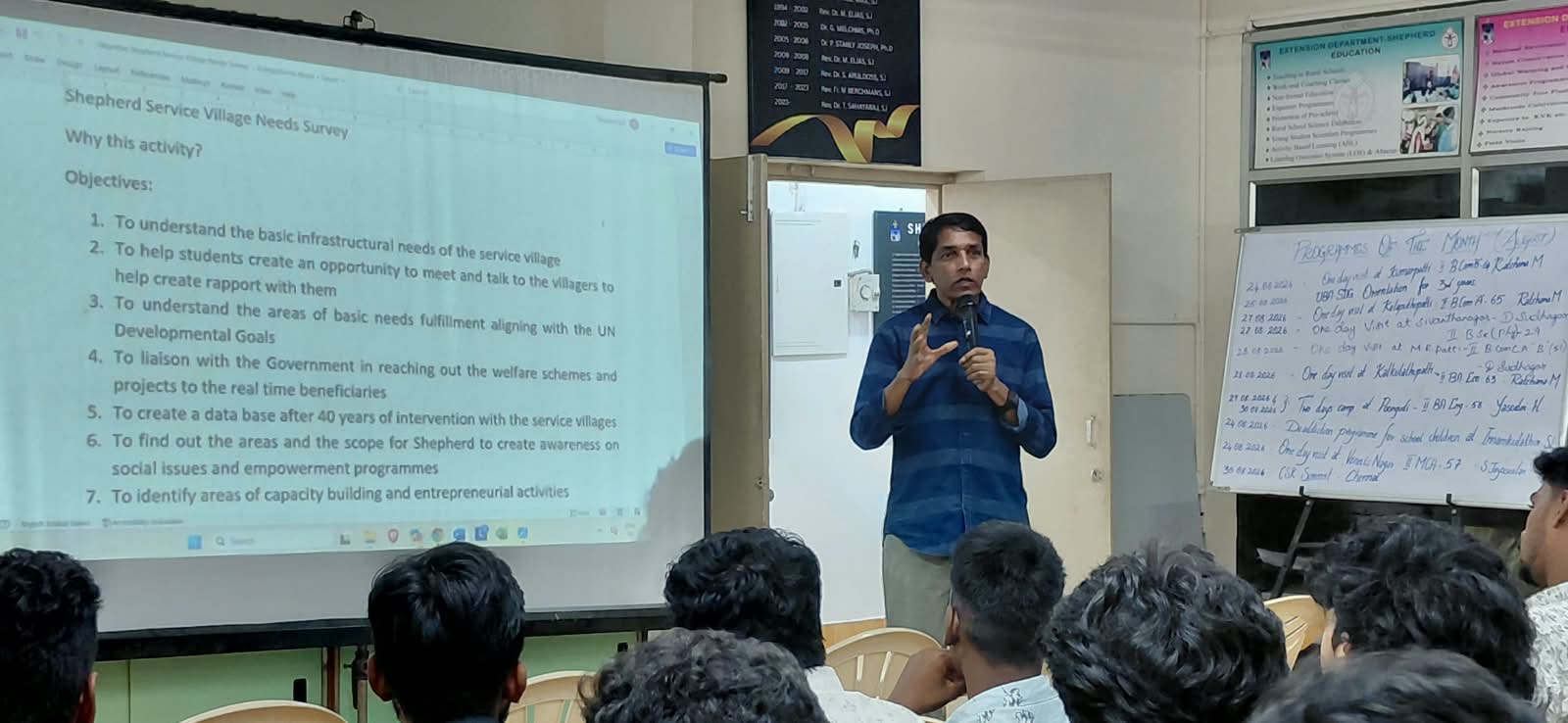
A training programme on data collection based on the Sustainable Development Goals (SDGs) was organized at the Extension Department of St. Joseph’s College (Autonomous) for students involved in serving the adopted villages under the Unnat Bharat Abhiyan (UBA) scheme of the Ministry of Education, Government of India, in collaboration with the SHEPHERD Extension Department.
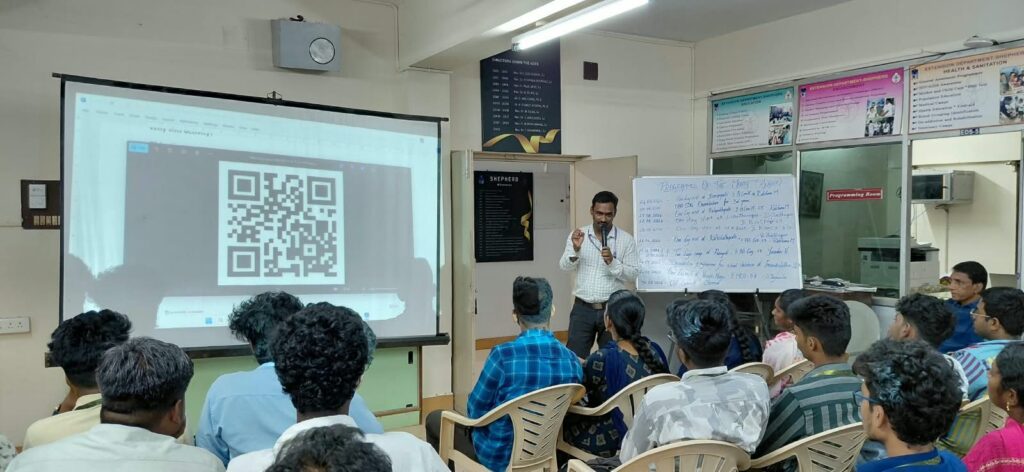
The programme was conducted under the guidance of the College Principal, Rev. Dr. K. Arockiam SJ. The Director of the Extension Department, Rev. Dr.T Sahayaraj SJ, explained the importance of identifying and systematically documenting the day-to-day problems, needs, and challenges faced by rural communities.
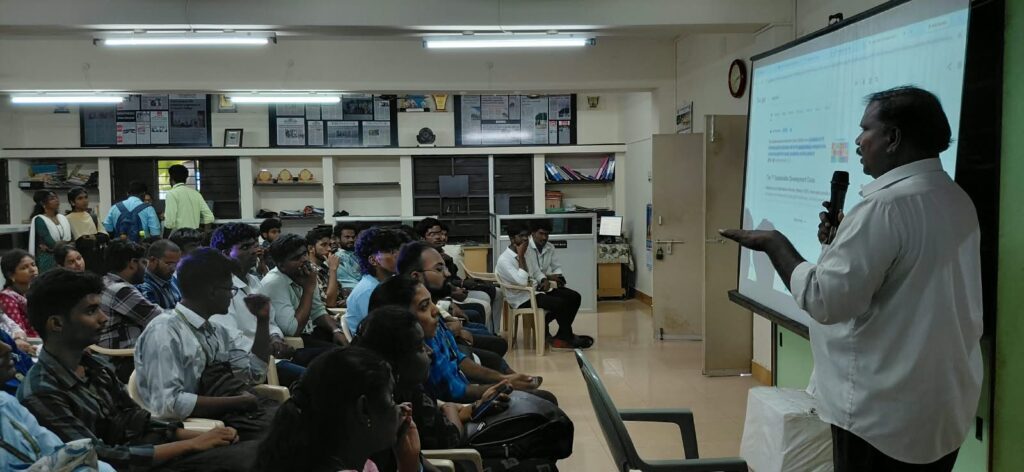
The UBA Coordinator of SJC, Dr. A. Alexandar, explained the procedures for completing the online data collection forms, accurately gathering the required information, and utilizing the collected data to address the needs of the villagers through CSR funds and various welfare schemes of the Central and State Governments.
The Assistant Coordinator, Mr. Lenin, highlighted the importance of consolidating information related to the social, economic, and basic needs of all adopted villages and developing a comprehensive village database for the College.
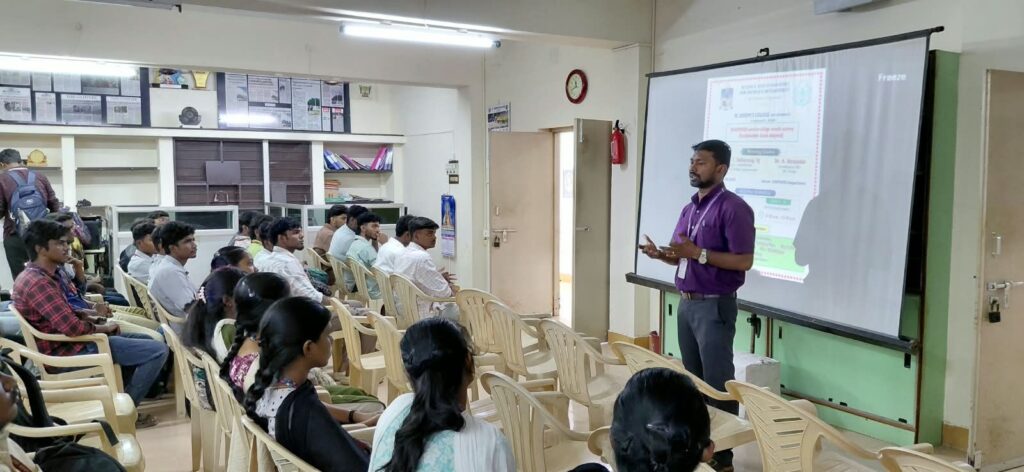
Such a database would serve as an important resource for planning and implementing need-based development activities.
At the end of the programme, data collection forms were shared with the students through QR codes. The information collected through these forms will help identify the specific needs of the adopted villages and facilitate appropriate interventions in accordance with the Sustainable Development Goals.
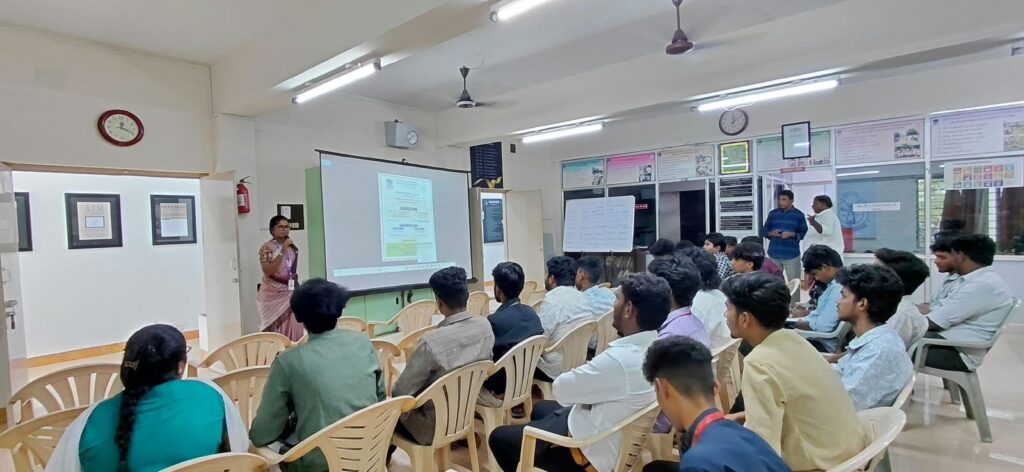
The programme was coordinated and organized by the Extension Department coordinators Mr. Jayaseelan, Ms. Yasodai, Mr. Sudhagar, Ms. Ratchana, and Junior Assistant Mr. Amaleswaran.
A total of 132 students from 12 departments of the College participated in the programme. Among them, 61 students participated in Session I and 71 students participated in Session II.